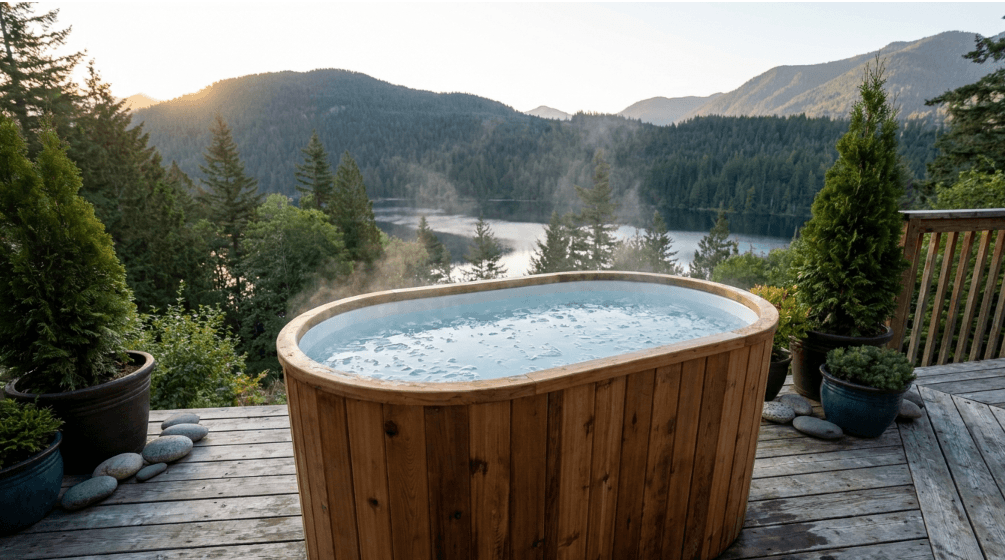
For post-workout recovery, most people plunge for 2 to 5 minutes in water between 39 and 50 degrees Fahrenheit, either within an hour of finishing an endurance or general training session, or several hours later (or on a separate day) after strength training, since immediate cold exposure right after lifting may blunt part of the muscle-building response. A compact 45 to 65 gallon tub with a standalone chiller is enough for a solo recovery routine and fits into a garage corner or covered patio without a major renovation.
What Does a Typical Post-Workout Plunge Routine Look Like?
A common pattern for someone using a home plunge regularly is training first, then either heading straight to the plunge for endurance-style sessions or building in a delay for strength days. The session itself is usually short: step in, submerge to the shoulders, hold still and breathe steadily for 2 to 5 minutes, then get out and dry off and warm up gradually rather than jumping into a hot shower immediately. The value of a home setup over a gym or recovery studio is being able to do this consistently, right after training, without driving anywhere.
Why Does Timing Matter So Much for Strength Training?
This is the piece that trips up a lot of new users. Cold-water immersion right after a hard resistance training session has been associated in some trials with a reduced muscle-building response from that specific session, likely because the cold exposure blunts part of the inflammatory signaling muscle tissue uses to adapt and grow stronger. That does not mean cold plunging cancels out training, but for anyone whose primary goal is strength or size, separating the plunge from the lifting session by several hours, or saving cold plunging for cardio or lighter training days, is the more cautious approach based on the current evidence.
How Does Temperature Affect the Recovery Session?
Home routines typically run colder than most published research protocols, often 39 to 50 degrees Fahrenheit at home versus the 50 to 59 degree range used in many studies, with home sessions correspondingly shorter at 2 to 5 minutes versus 10 to 15 minutes in some trials. There is no single confirmed ideal combination, so a new user is generally better off starting on the milder, shorter end and adjusting gradually rather than starting at the coldest setting a chiller can produce.
How Often Should Recovery Sessions Happen?
Two to four sessions a week is a common pattern for people using cold plunging as part of a regular recovery routine alongside consistent training, though the research does not point to one confirmed optimal frequency. What matters more in practice is consistency: a plunge used sporadically once a month is unlikely to deliver whatever soreness-related benefit the research on perceived recovery suggests, compared to a routine built into the regular training week.
What Does a Small-Space Recovery Setup Actually Need?
For someone building this into a home training routine, a compact chiller-equipped tub in the 45 to 65 gallon range covers a solo recovery routine without needing a dedicated room. A garage corner near an existing outlet, a covered patio spot, or a mudroom with a floor drain nearby all work, provided there is a dedicated electrical circuit for the chiller and enough clearance to reach the filter. Anyone building out a home gym and recovery corner together can look at current tub and chiller sizing to shop the current options before finalizing where the equipment will actually sit, since matching footprint to the available corner is what makes the routine sustainable long term.
What Should a Beginner Expect in the First Few Weeks?
Tolerance to cold water builds gradually. Many new users start at milder temperatures, around 55 to 60 degrees, for shorter sessions and work down toward colder settings and slightly longer durations over several weeks as it becomes more familiar. Rushing straight to the coldest, longest session a chiller can produce is a common reason people quit the routine early rather than building it into a sustainable habit.
What Does a Sample Training Week With a Plunge Look Like?
A runner or cyclist focused on endurance might plunge after most hard sessions, since the research on cold-water immersion and perceived soreness leans more favorable for that kind of training load. A lifter working on strength or size might reserve the plunge for cardio days, mobility days, or the evening after a lifting session rather than immediately post-workout, to sidestep the timing concern around blunted adaptation. A mixed-training household sharing one unit often ends up with an informal schedule: plunge right after Tuesday’s run, wait until evening after Thursday’s lift, and use it as a stand-alone recovery session on a rest day. None of this needs to be rigid, but having a rough plan avoids the common pattern of using the plunge inconsistently and then being unsure whether it is actually helping.
How Does a Plunge Fit Alongside Other Recovery Tools?
Cold plunging is one tool among several, not a replacement for basics like sleep, hydration, and adequate protein intake after training, all of which have a larger and more consistent evidence base behind them for recovery. Some people alternate cold plunging with heat exposure, such as a sauna session on a different day, though contrast therapy protocols alternating hot and cold in the same session are less standardized in the research than either used on its own. For a small-space setup, prioritizing the plunge alongside whatever recovery habits already have the strongest evidence behind them, rather than treating it as a standalone fix, tends to produce more consistent results over a full training cycle.
What Should Someone Track to Know If It Is Working?
Because the research on cold plunging for recovery is genuinely mixed, paying attention to a few personal markers over several weeks is more useful than assuming it will work a certain way. Tracking perceived soreness the day after training, sleep quality on plunge days versus non-plunge days, and whether training sessions feel harder to recover from over a training block gives a rough personal read on whether the routine is actually helping. Some people notice a clear difference; others find it makes little practical change to how they feel day to day, which lines up with how mixed the underlying research is. Either outcome is a legitimate result worth adjusting the routine around, rather than forcing a habit that is not delivering a noticeable benefit for that particular person.
Frequently Asked Questions
How soon after a workout should you cold plunge?
For endurance or general soreness relief, within 30 to 60 minutes is common. For strength training, waiting several hours or plunging on a separate day is generally preferred.
How long should a post-workout cold plunge session last?
Most home routines run 2 to 5 minutes at colder home temperatures, while research protocols often use milder water for 10 to 15 minutes.
How many times a week should someone cold plunge for recovery?
There is no single confirmed frequency, but two to four sessions a week is a common pattern among people using it for general recovery.
Can a small-space cold plunge fit into a regular training routine?
Yes. A compact 45 to 65 gallon chiller-equipped tub set up in a garage corner, mudroom, or covered patio is enough for a single-user recovery routine.
References
- Effects of cold-water immersion on health and wellbeing: A systematic review and meta-analysis, PLoS One, 2025
- Effects of cold water immersion after exercise on fatigue recovery and exercise performance: meta analysis, Frontiers in Physiology, 2023
- Cold-water immersion (cryotherapy) for preventing and treating muscle soreness after exercise, Cochrane Database of Systematic Reviews, 2012